Landlords in the spotlight – how tenants can avoid getting stung
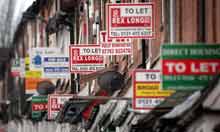
Mortgage lenders must approve a move to letting. Photograph: Moodboard/Corbis
'If a rental property seems too good to be true, it usually is.' Photograph: Christopher Furlong/Getty Images

It's not just high rents that tenants have to worry about – there are
also an increasing number of fraudsters intent on relieving them of
their hard-earned cash.
In December, a New Zealand couple looking to rent in Swansea told the local paper how they had been conned out of £3,000
in advance rent after answering an advert for a one-bedroom flat. They
signed a contract with the "landlord" who showed them the apartment,
only for the real owner to visit after they had moved in and inform them
the contract was fraudulent.
 The unlucky pair are not alone. With
rental accommodation in short supply in some areas of the country, con
men are cashing in on tenants' desperation to find a place to live. On
some occasions fraudsters have gained access to properties and taken
prospective tenants around, pretending the property
is vacant and under their control. In other cases the fraudsters are
purporting to rent out property that doesn't exist, has already been
rented out, or has been rented to multiple victims at the same time.
The unlucky pair are not alone. With
rental accommodation in short supply in some areas of the country, con
men are cashing in on tenants' desperation to find a place to live. On
some occasions fraudsters have gained access to properties and taken
prospective tenants around, pretending the property
is vacant and under their control. In other cases the fraudsters are
purporting to rent out property that doesn't exist, has already been
rented out, or has been rented to multiple victims at the same time.
Problems also arise when a property is rented out by the real
landlord but without the permission of the mortgage company. This is a
breach of mortgage terms and conditions and, in theory at least, can
lead to repossession. Other landlords might be in financial difficulty
and at risk of repossession, but keep tenants in the dark about the risk
to the roof over their heads.
Matt Hutchinson, director of SpareRoom.co.uk,
says there are plenty of resources available to help landlords carry
out checks on tenants, but the same isn't true for would-be renters who
want to do background checks. "However, there is nothing to stop tenants
doing a little research of their own," he says. "Start off by asking
questions. A good landlord will be happy to answer anything – within
reason of course. Being thorough doesn't have to mean being
confrontational. Ask how long the previous tenants were in the property,
why they left and whether it's possible to speak to them."
As well as asking questions, there are a few checks you can do online to establish if things are really as they seem. You can check whether the landlord actually owns the property through the Land Registry. For
£3 you can buy title registers showing ownership details. Land Registry
data can also tell you about any charges on the property – these are
loans, including mortgages, where the building is used as security and
can be repossessed if payments are missed.
If it does show that
there is a mortgage on the property, you might want to dig deeper. To
stick to mortgage lenders' terms and conditions, a landlord will either
need a buy-to-let mortgage or "consent to let" from their mortgage
lender to rent out a property that has a residential mortgage.
"Councils, housing
associations and corporations always require proof from landlords that
they have consent to let from their mortgage provider – so there is no
reason why prospective private tenants shouldn't ask for the same
proof," says Glenn Nickols, director of online tenants community the Tenants' Voice. "A reputable landlord shouldn't have a problem in supplying the tenant with a copy of such permission."
If
a landlord has the mortgage lender's permission to rent the property
out, a tenant will be in a much stronger position if the property is
repossessed due to arrears on the mortgage.
The past year has seen an increase in subletting, and "rent-to-rent".
While the latter can be done perfectly legally, some middle-men do it
without the landlord's permission. Tenants could be at risk of eviction
if any middle man fails to pass on the rent to the proper landlord. To
protect yourself, make sure you do due diligence on anyone you are
handing rent money to; ask to see the agreement between the landlord and
any middle-man or agent, do a quick Google search on both, and request
proof that any deposit you hand over is properly protected.
A
dodgy landlord might use a letting agent, but he or she will come under
less scrutiny if the property is advertised directly, so it is worth
being on your guard when responding to adverts on listing sites.
Gumtree, which lists thousands of properties around the UK, offers its users tips on how to avoid rental rip-offs.
"If
it seems too good to be true, it probably is. If the price of rent is
unusually low, there might be a catch," says Paul McCambridge, head of
property at Gumtree. "Check other similar properties in the same area to
get a good idea of what you should expect to pay. It sounds obvious,
but you should always visit a property before handing over any money to a
landlord. People who are not willing to show you their property or meet
with you before accepting you as their tenant might not be legitimate."
 Never use a Western Union or Moneygram transfer service to pay your rent. Photograph: Pewee Flomoku/AP
One popular tactic used by scammers is to persuade tenants to use
Western Union or Moneygram to transfer money. While these services are
legitimate businesses, you shouldn't use them to send your deposit or
rent. Western Union admits its services are often used by property
scammers. It says that in the majority of the cases where this fraud was
committed, scammers posed as landlords on classified websites and
conned legitimate house hunters out of their money.
Peter Barnes,
senior manager global investigations at Western Union, says: "Consumers
can lower their chances of falling victim to fraud by following three
key tips: never use a money transfer service to send money to people you
haven't met in person; never provide your banking information to people
or businesses you don't know; and never use a money transfer service to
prove you have funds available for a deposit or any purchase."
 Mortgage lenders must approve a move to letting. Photograph: Moodboard/Corbis


 The unlucky pair are not alone. With
rental accommodation in short supply in some areas of the country, con
men are cashing in on tenants' desperation to find a place to live. On
some occasions fraudsters have gained access to properties and taken
prospective tenants around, pretending the property
is vacant and under their control. In other cases the fraudsters are
purporting to rent out property that doesn't exist, has already been
rented out, or has been rented to multiple victims at the same time.
The unlucky pair are not alone. With
rental accommodation in short supply in some areas of the country, con
men are cashing in on tenants' desperation to find a place to live. On
some occasions fraudsters have gained access to properties and taken
prospective tenants around, pretending the property
is vacant and under their control. In other cases the fraudsters are
purporting to rent out property that doesn't exist, has already been
rented out, or has been rented to multiple victims at the same time.
No comments:
Post a Comment